How to choose a polki bridal set
A gemologist’s guide to the jewellery you will wear on the most photographed day of your life.
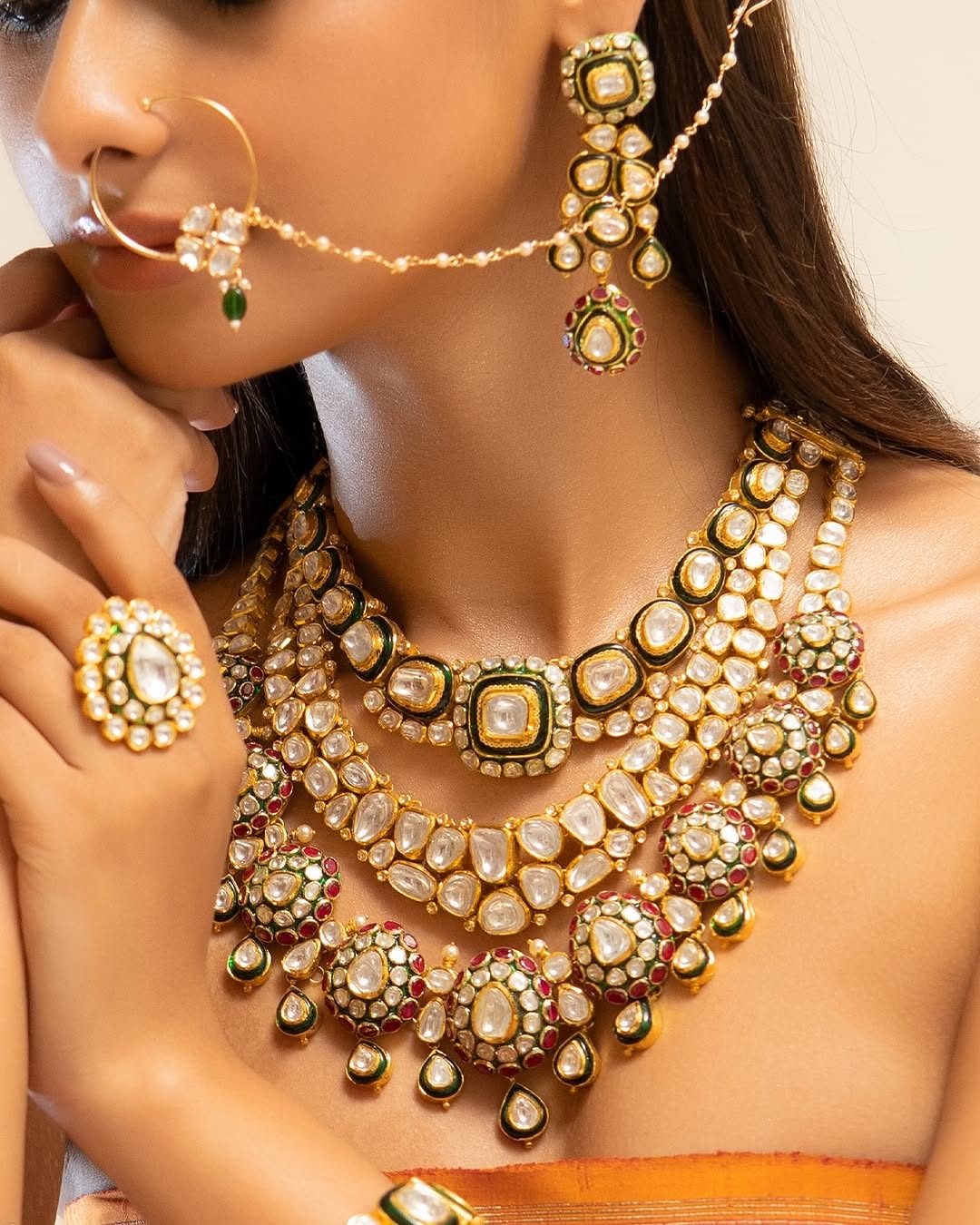
Every season brides come to our boutique with a screenshot, a lehenga swatch and a little anxiety. Polki is the jewellery most of them want, and the one they understand least. It is worth understanding, because a good polki set is bought once and worn for a lifetime, and then given away.
What polki actually is
Polki is diamond in its most natural form: stones that are cleaved and polished but never given the many facets of a modern brilliant cut. They are set flat, usually backed with silver or gold foil, so that they glow rather than sparkle. That softness is why polki looks at home in old photographs, in candlelight and beside heavy silk.
Polki is often confused with kundan. Kundan is a setting technique, in which stones are bedded into pure gold foil by hand. A polki piece is usually set in the kundan or jadau manner, but a kundan piece is not always polki: it may hold glass or other stones. When you buy, ask plainly what the stones are.
Begin with the outfit, not the jewellery
The colour of your lehenga or saree decides more than you think. Deep reds and maroons carry yellow gold and green enamel beautifully. Pastels and ivory suit polki set with pearls, or with a lighter gold finish. Bring a swatch of the fabric to the store. We hold every piece against it before you try it on.
Think in layers
A bridal look is usually built from a choker close to the neck and a longer haar beneath it, with earrings, a maang tikka and sometimes a nath. You do not need all of them in polki. A polki choker and earrings with a gold or pearl haar can look richer than a full matching set, and costs less.
Weight matters on the day
Brides wear their jewellery for twelve hours or more. A heavy necklace that looks magnificent on a stand can become unbearable by the pheras. Try pieces on and keep them on for a while. Good jewellery is balanced: the weight should rest on the collarbone, not pull at the neck.
Look at the back
Turn every piece over. Fine polki work is finished on the reverse too, often with hand-painted meenakari enamel. Clean soldering, smooth edges and secure settings at the back tell you more about a jeweller than the front ever will.
Ask the questions that protect you
Ask for the gold purity and the hallmark. In India, gold jewellery must carry a BIS hallmark with a six-digit HUID code, which you can check yourself. Ask what the stones are, how they are counted in the price, and what the jeweller’s policy is if you want to exchange or remake the piece in years to come. A good jeweller will answer all of this without hesitation.
Think beyond the wedding
The best bridal sets are designed to come apart. Earrings that can be worn on their own to a dinner, a choker that works with a sari at a festival, a haar that can be shortened. Jewellery that is worn often is jewellery that is loved, and that is the point of it.
If you are planning a wedding, walk into the showroom on Shakespeare Sarani with your swatch and your screenshots. We will pour the tea and bring out the trays.
Questions about a stone or a piece? Message us on WhatsApp or visit the store on Shakespeare Sarani.